
Report of the 2009 Faculty of Law Annual Visit to the European Institutions
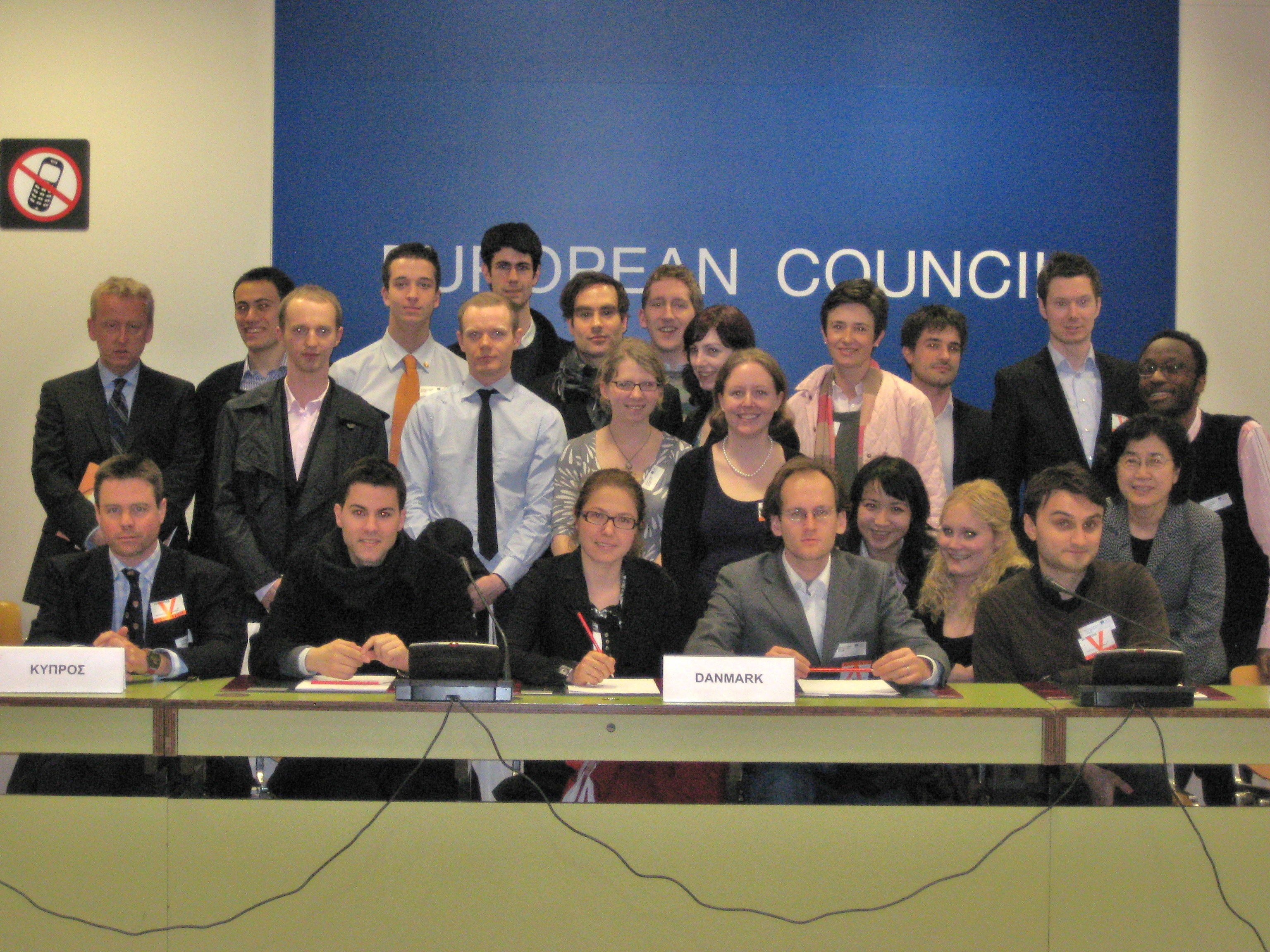
2009 Annual Visit to the European Institutions
In addition to facilitating and coordinating the communication of ideas of Europe to the wider community, an important role played by the Centre for European Legal Studies is to organise the Faculty of Law annual visit to the European institutions. The visit provides an invaluable insight into the work and workings of the various institutions and draws students’ attention to the opportunities that exist to participate in Europe and European Law beyond their academic study. Between 23 March – 27 March 2009 Dr Odudu, Mrs Graepel, and Mr Martin Steinfeld led a party of 19 (made up of 7 law undergraduates, 3 LLM students, 1 faculty visitor, and 8 graduates students from the Centre of International studies) to visit the European Parliament and European Court of Human Rights in Strasbourg, the European Court of Justice in Luxembourg, and the European Commission, Council, and United Nations High Commission for Refugees in Brussels. The visit was made possible by financial support from Allen & Overy and the office of Ms Arlene McCarthy MEP. The success of the visit was ensured not only by the calibre of the speakers encountered, the financial contributions and the warm welcome that the group received at all the institutions.
European Parliament
With the parliament in full session, students sat in a joint debate on cohesion policy. After the parliamentary debate the party were met by Richard Howitt MEP. It was particularly pleasing that as an MEP representing the Cambridge region, a member of the sub-committee on Foreign Affairs, and Vice-Chairman of the sub-committee on human rights, that Mr Howitt was available to respond to the wide range of questions raised by students of law, International Relations, and European Studies in relation to his specific areas of responsibility. The group were further pleased that both Arlene McCarthy MEP and Baroness Glenys Kinnock MEP also gave their time generously and offered candid insight into their experiences as parliamentarians. They answered questions relating to both personal and parliamentary involvement in aspects of the Internal Market, Consumer Protection, International Trade, and the role of the European Parliament in national political orders.
European Courts of Human Rights
At the ECHR the party were addressed by Pamela McCormick of the UK section. Ms McCormick spoke of the workings of the Court and of what it is like to work at the Court.
European Court of Justice
In Luxembourg the party were treated to an unusually entertaining hearing in Case C-141 /08 P, which concerned anti-dumping duties, imposed on ironing boards imported from China and the Ukraine. The hearing took place in the Novelle Grande Salle and Eleanor Sharpston was the Advocate General. Following the hearing, Sir Konrad Schiemann, Sir Nicholas Forwood, both Members of the CELS Advisory Board, and Eleanor Sharpston, showed great generosity by hosting a question and answer session followed by lunch, to which a number of their referendaire (Mr M. Radley, Chambers of Judge Forwood; Dr De Baere, Chambers of Advocate General Sharpston, and Mr C. Zatschler, Chambers of Judge Schiemann) also attended. This provided an opportunity to discuss at close quarters with those charged with interpreting the Union legislative texts about how they see their role and how they fulfil that mission.
European Commission
In Brussels the group first attended a half-day programme of seminars. The group were first welcomed by Mr Luc Gillis, from the European Personnel Selection Office who explained the benefits of working for the European Commission and the process by which it recruits staff. Mr Christopher Docksey, a Member of the Commission’s Legal Service, then explained the role and work of the legal service. This was particularly interesting since the Commission’s legal service was before the ECJ in the hearing the students attended in Luxembourg. Finally, Mr Vandercappellen from the Directorate-General "Education and Culture” engaged in debate that ranged from the Union’s role in the current financial crisis to external relations.
Council of the European Union
At the Council of the EU, Mr Aidan Feeney, of the Council’s Legal Service gave an account of the “The role of the Council” and how the officers of the Council aided the negotiation of Council measures. As this was the first visit for the trip to the Council for several years the trip provided a unique insight into how the Council really works. Mr Feeney himself has to work very closely with the Council Presidency and recounted to the group tales of tense negotiation, extremely late nights and informal diplomatic rules.
Allen & Overy
In the early evening students attended a presentation and reception generously hosted by Allen & Overy. Welcomed by Alexander Kraemer, Adam Kidane, Fiona Muir, the visiting students learned of the type of work done by the firm in Brussels, and the opportunities to practice law with a European dimension, and gained a sense of what life is like practicing at a law firm regularly interacting with the European institutions.
UNHCR
Mr Giles Van Mortel explained the general role of the UNHCR before Mr Sam Boutruche gave an account of the increasingly important role the UNHCR plays in relation to nationals of one EU Member States seeking asylum in another EU Member State. Our hosts, as ever, were generous with their time being willing to answer a wide range of questions addressing not only what the UNHCR did but what it was like to work at the UNHCR.